We offer advanced chocking solutions that enhance structural integrity and reduce vibration—delivering lasting durability for critical marine applications. Each product reflects our commitment to innovation and operational excellence.

More About Us CALL US [+62] 811-7770-440 For any inquiry

PT. PROPULSION ENGINEERING INDONESIA

...

Specialized marine propulsion company, established in 2023. As an authorized distributor of QuantiCast for the Indonesian region, we offer a wide range of turnkey chocking and grouting solutions—covering every stage from design planning and calculations to material supply, on-site application, technical support, final hardness testing, and certification. Our proven system ensures secure and vibration-resistant installations for marine engines and heavy equipment, delivering reliability and performance in demanding operational environments.

✦ Vision

To be a global leader in the provision of innovative and sustainable propulsion solutions to the marine and offshore industries, with a commitment to improving the efficiency, safety and operational performance of ships and maritime infrastructure worldwide.

✦ Mission

Advancing efficient propulsion technology, delivering quality and reliability, minimizing environmental impact, building lasting client partnerships, driving sustainable growth through responsive services across the marine and offshore sectors.
Our Products

...

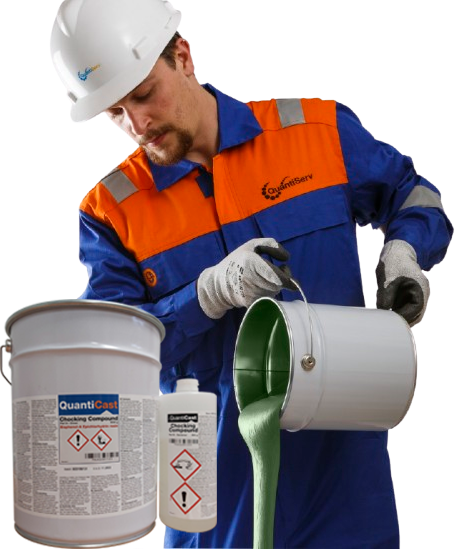
QuantiCast Chocking Compound

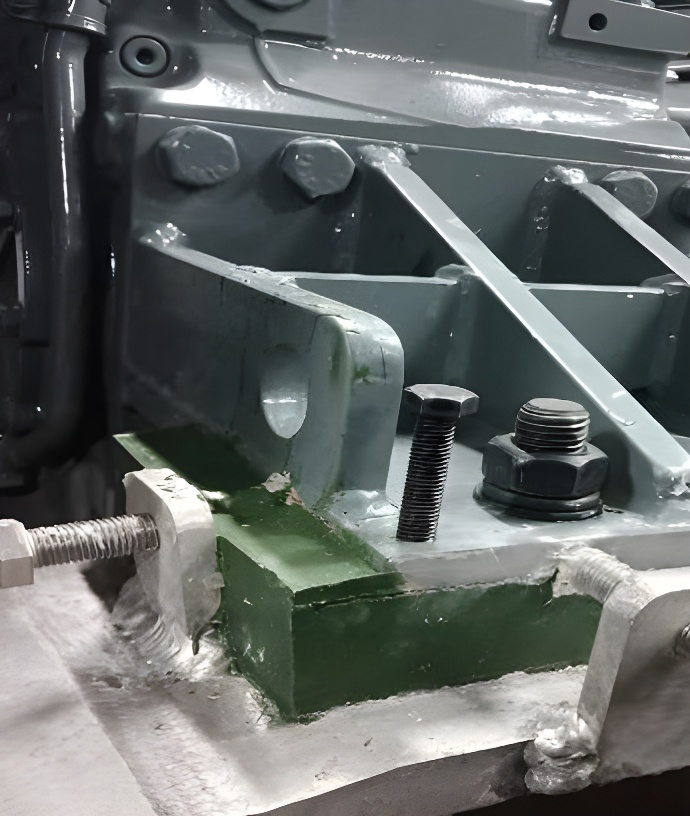
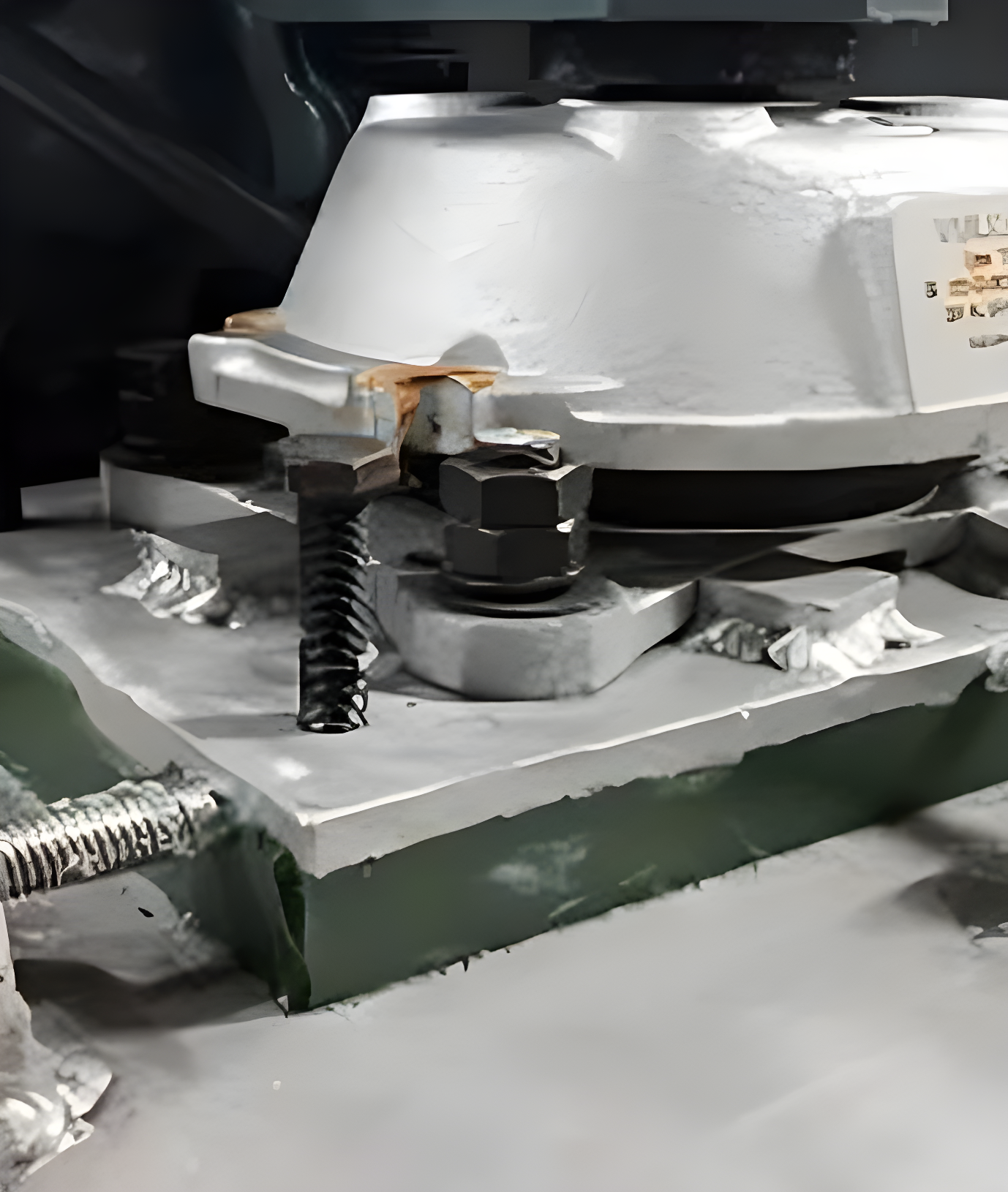
Specifically designed for precision aligned engine plugging, QuantiCast comes as a two-component epoxy solution capable of withstanding the harshest environments. With high compressive strength, impact resistance, and chemical resistance to hydrocarbons and lubricants, it is the first choice for marine engine installations and heavy industrial equipment. The ideal thickness of between 10 - 70 mm makes QuantiCast flexible for a wide range of applications - from foundations of ship's main engines, gearboxes, alternators, rudders, pumps to fixation of stern tubes and support bearings. Not only for the maritime sector, QuantiCast is also efficient in industrial applications, including machine foundations, crane rails and outdoor structures.
QuantiCast

A SOLID FOUNDATION
FOR YOUR EQUIPMENT WITH

QuantiCast

A HIGH VALUE EPOXY RESIN FOR
ALL YOUR CHOCKING AND GROUTING NEEDS!

Discover the power of technical blockages to keep your machines stable - QuantiCast, epoxy reliability for long-term performance.

Advantages of QuantiCast

Cost Icon

Cost & Chemical Resistance

  • Highly resistant to chemicals, solvents, and moisture
  • Low total lifecycle cost
Efficiency Icon

Efficiency & Installation Simplicity

  • No need for in-situ machining or surface preparation
  • Easy to apply with short installation time
  • Maintains precise alignment without shrinkage or creep
Performance Icon

Mechanical & Environmental Performance

  • High compressive and impact strength
  • Tough, durable, and highly corrosion resistant
  • Reduces operating noise and shock
  • Excellent adhesion on various substrates
Main Physical Properties
Compressive Strength110 N/mm² (22,000 psi)ISO 604
Compressive Modulus2’760 N/mm² (400,000 psi)ISO 604
Tensile Strength38 N/mm² (5,500 psi)ISO 527-2
Barcol Hardness> 35ASTM D-2583
Specific GravityResin 1.64 kg/ltr, Hardener 0.98 kg/ltr
Maximum Temperature121 °C (250 °F)
Pot Working Life10-15 min @ 25 °C
Cure Time (approximately)24 hours @ 21 °C (70 °F)
Packaging Size9.8 kg (21.5 lbs) kit
Net Volume6.2 L
ColourGreen
ApprovalsABS, Bureau Veritas, ClassNK, DNV-GL, Lloyds Register, RINA

Hardener Reduction

QuantiCast is engineered for optimal precision, with packaging designed to ensure the correct mix ratio—each resin bin matched perfectly with a corresponding hardener bottle. This standard combination suits nearly all application scenarios.

In rare cases, however, when the epoxy pour has minimal surface exposure relative to its volume, the heat generated during curing may not dissipate efficiently. This can trigger an uncontrolled exothermic reaction—where rising temperatures accelerate the cure too quickly, potentially causing cracks or surface distortion.

To manage such conditions, QuantiCast offers the flexibility to adjust the resin-to-hardener ratio depending on pour volume and ambient temperature. This ensures safe curing and structural integrity.

Hardener Reduction Illustration

Application Guide

No Materials required
1 QuantiCast Chocking Compound: resin and hardener (The amount required for the chocking activity has to be calculated according to chocking plan, including 15–20% of resin safety amount in case of leaks.)
2 Damming Materials:
  • Open cell flexible foam strips
  • Front metal plate (4–6 mm thickness)
  • Silicone sealant
  • Epoxy putty
3Epoxy solvent
4Release agent
5Non-melt grease
6Non-hardening putty
7Bolt holes protection foam (Neoprene, Armaflex)
8Mixer or variable speed drill capable of 200–300 rpm
9Mixing blade
10Certified IR thermometer for surfaces temperature
11Barcol measuring instrument for chock hardness
12Safety equipment: goggles and protective gloves
13Heaters / air conditioning
No Preliminary checks
1 Ensure all material needed are available on site. Determine the right amount of QuantiCast chocking compound according to the chocking plan (chock area + 15%).
2 Store QuantiCast Chocking Compound (resin and hardener) at 23-25 °C for at least 24 hours before use
3If resin contact metal surface temperature is below 15 °C use heaters (tungsten, lamp, heater, and canvas) to increase it to 20-25 °C.
4If resin contact metal surface temperature is above 28 °C use air conditioning to reduce it to 25 °C.
5After sanding to near white metal, clean all resin contact surfaces to be free of oil, grease, water, rust, thick paint or fine particles.
6After final cleaning by Epoxy solvent, a thin layer of epoxy primer can be applied on resin contact surfaces in order to prevent rust and corrosion. Please contact QuantiServ for instruction about epoxy primer to be used.
7After the equipment is correctly aligned, drill the bolt holes

Damming procedure

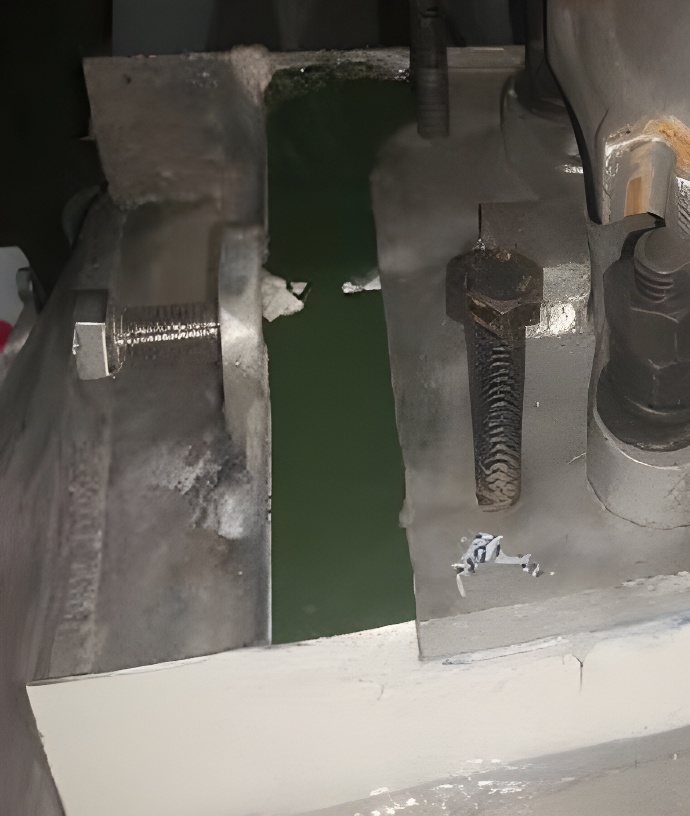
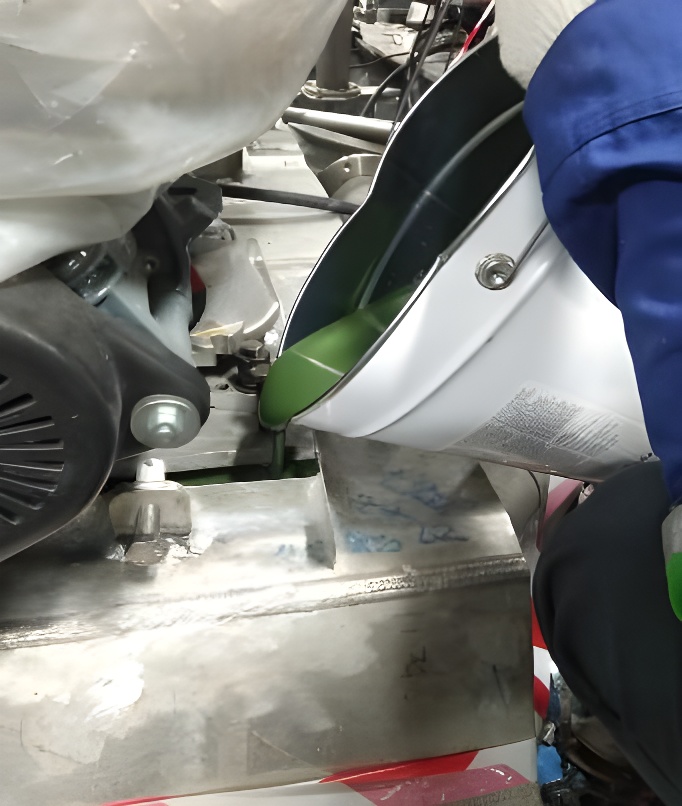
The pictures show the general damming procedure. The damming needs to be installed according to the chocking plan for the specific machine. Insert open cell foam strip on 3 sides, in the back and on the sides of the chock. Foam height has to be 6 mm higher than the chock thickness in order to ensure compression and maintain it firmly in place. Cut the foam 25 mm off the bedplate edge and spray the chock area with release agent. The exposed bolt holes have to be plugged by grease-covered protective foam to prevent them from filling up.

Install the front metal plate by tack welding and use silicone to seal or use epoxy putty. Put it in position at 16–19 mm from the bedplate edge. Metal plate height must be at least 40 mm greater than chock thickness. Install 2 pieces of foam to seal the front plate on the sides to prevent QuantiCast from overflowing. Spray the inside face of the front metal plate with release agent. Make sure to seal with silicone all possible leaking spots of the damming.

Damming Procedure Illustration

Mixing and pouring

  1. Ensure the damming is completed and sealed well.
  2. Ensure there is enough QuantiCast Chocking Compound on site at a temperature between 23 °C and 25 °C.
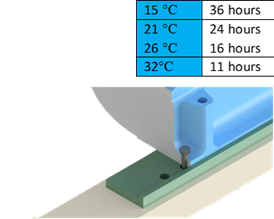
  3. Check the temperature of the chocking area and determine the right amount of hardener (B) to be added to resin (A) according to the table below:
    Hardener Reduction Table
    Note: Hardener ratio must be adjusted based on temperature and chock thickness. For critical installations, consult QuantiServ Qualified Installer.
    1. Put on the protective gear (gloves and eye protection).
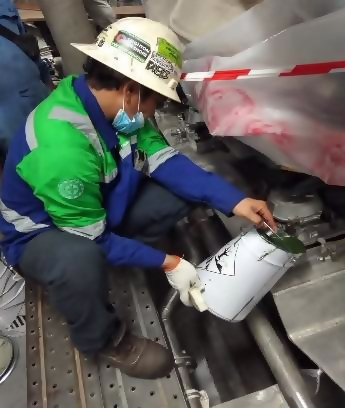
    2. Mix the resin (A) at 150 rpm for 1–2 minutes, keeping the blade below the liquid surface to avoid formation of air bubbles.
    3. After final cleaning by Epoxy solvent, a thin layer of epoxy primer can be applied on resin contact surfaces to prevent rust and corrosion.
    4. After the equipment is correctly aligned, drill the bolt holes.
    5. Pour the chock immediately after mixing slowly and always in the same spot at a height of 0.3–0.4 m. Do not scrape out the residue from the sides and bottom of the can.
    6. Check for leaks and use putty to seal them.
    7. Fill the front plate at least 15 mm higher than the chock thickness. Do not fill it completely.
    8. Prepare sample chocks for hardness test if requested.
    9. Check and refill the front plate if the resin level decreases.
    Damming Procedure Illustration

Curing and final checks

  1. Keep watching for leaks until all chocks have become hard.
  2. Make sure the temperature is at least 15 °C. Keep heating for the time indicated to ensure the epoxy cures completely. After complete curing, remove the heater and allow the cured chock to return to ambient temperature.
  3. Remove the front metal plate. Abrade off the sharp edge of the chock
  4. Release the adjusting bolts.
  5. Tighten the hold down and fitted bolts to the required torque according to calculated bolt tension.
  6. Test the hardness of the chocks (and/or the samples) for reporting to marine classification society and customer.
  7. Check the alignment after chocking. The maximum resin lowering after curing is 0.02 mm/cm.
Damming Procedure Illustration

QuantiCast Data Sheet

Technical Data Sheet
Material Safety Data Sheet Part A (Resin)
Material Safety Data Sheet Part B (Hardener)
Promo Banner

Our Services

We provide engineers and service technicians to carry out QuantiCast installation work on board.
  • ✔ Working out a chocking plan.
  • ✔ Calculating the correct tightening torques of the foundation bolts.
  • ✔ Assisting the customer to get classification approval, if any is required.
  • ✔ Executing the work at site (preparation, pouring, post-pouring work).
For any inquiry, CALL US [+62] 811-7770-440

Trained Technicians

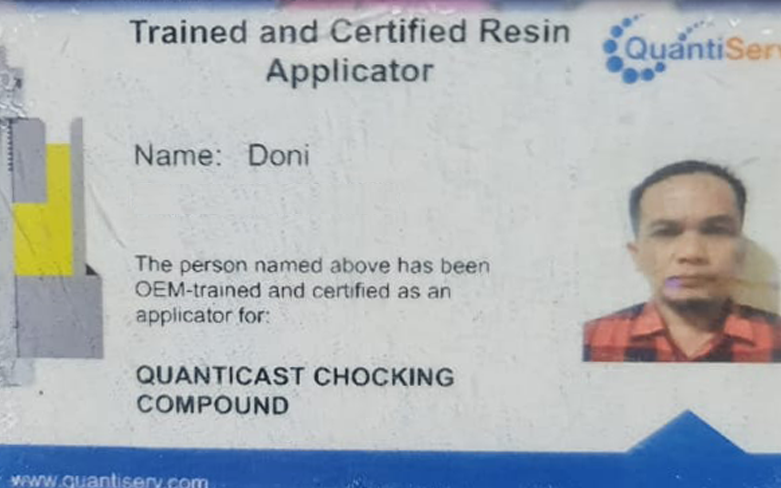
All our epoxy resin technicians are trained and certified to work with QuantiCast.

ID Card 1 ID Card 2

Contact us

...